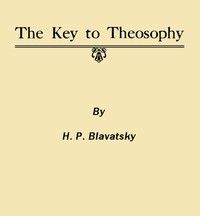
The Key to Theosophy opens with a direct question from an inquirer about the meaning of the name “Theosophy,” immediately establishing the dialogic format that structures the entire work. Blavatsky, as the respondent, defines Theosophy as the “Wisdom-Religion” and distinguishes it from Buddhism, asserting its esoteric continuity across ages. The preface dedicates the book to her pupils “that they may Learn and Teach in their turn,” signaling a pedagogical intent. The table of contents reveals a systematic progression from defining the Society and its objects to detailed expositions on post-mortem states, reincarnation, and karma. The opening thus primes the reader for a methodical, defensive clarification of Theosophy against common misconceptions.
The Dialogic Structure as a Teaching Tool
The entire text is cast as a conversation between an “Enquirer” and a “Theosophist,” a device that allows Blavatsky to anticipate and counter objections. For instance, when the Enquirer points out a “discrepancy” in the Buddhist Catechism regarding the Skandhas and memory, the Theosophist responds with a detailed explanation of the reincarnating principle and the dual nature of consciousness. This back-and-forth mirrors the Socratic method, but with a crucial difference: the Theosophist always has the final, authoritative word. The Enquirer’s role is not to challenge but to elicit clarification, making the book a catechism in question-and-answer form. Readers are positioned as the Enquirer, guided step by step through complex doctrines.
The Septenary Constitution of Man and Planet
Blavatsky repeatedly emphasizes a sevenfold division of both the human being and the cosmos. In Section VI, she outlines “The Septenary Constitution of our Planet” and “The Septenary Nature of Man,” distinguishing between soul and spirit. Later, in Section IX, she simplifies this into a fourfold division for practical understanding, noting that “the other is much too metaphysical.” This flexibility suggests that the septenary scheme is not dogmatic but heuristic. The Enquirer’s confusion about the Skandhas and memory is resolved by invoking the dual consciousness of Manas: a spiritual consciousness illuminated by Buddhi and a sentient consciousness tied to the brain. This dualism is central to understanding reincarnation and the persistence of the Ego.
The Treatment of Memory and Personal Identity
A recurring concern is why we do not remember past lives. Blavatsky addresses this in Section VIII, arguing that memory belongs to the lower, personal self, which dissolves between incarnations. The Ego retains only a “spiritualised remembrance” during the Devachanic state, a period of blissful reflection on the past life. The Enquirer presses: does this mean the Ego passes in “mental obscuration, or temporary insanity”? Blavatsky counters by comparing it to the natural transformation of personality from youth to old age—the inner man remains the same while the outer personality changes. This analogy grounds the doctrine in everyday experience, making the unfamiliar more accessible. The discussion reveals Blavatsky’s rhetorical strategy: she uses the Enquirer’s doubts to elaborate, not to concede.
The Role of Karma and the Skandhas
Karma is introduced in Section XI as the law that governs reincarnation, but the excerpts show Blavatsky weaving it into earlier discussions. The Skandhas—the aggregates that constitute the personality—are said to change with each incarnation, yet their “reflection” survives. This paradox is resolved by distinguishing between the impermanent personal self and the enduring Ego. Blavatsky insists that the Ego is “indestructible throughout the life cycle” as a thinking entity. The Enquirer’s persistent questioning forces precise definitions: “What is it? Is it only that ‘reflection,’ or those Skandhas, or always that same Ego, the Manas?” The Theosophist’s answer reaffirms the continuity of the divine man, while the personal consciousness is a temporary identification. This careful parsing of terms is typical of the book’s method.
Reading The Key to Theosophy as a dialogue rather than a treatise helps the first-time reader track Blavatsky’s arguments. The Enquirer’s questions often mirror likely reader confusion, so paying attention to the points where the Enquirer interrupts or challenges can illuminate the most contested doctrines. The book rewards slow reading: each section builds on the previous, and the same concepts—such as the dual Manas—recur with increasing complexity. A reader may wish to note the simplified fourfold scheme in Section IX as a practical reference point before tackling the more elaborate septenary divisions elsewhere.
Sometimes I return to Blavatsky’s catechism-style questions the way one revisits an old porch swing—slowly, knowing the creaks. Her earnest dialogue feels like a friend’s voice asking what really matters. That same patient wonder surfaces in Timaeus — Key Ideas to Explore, where Plato’s cosmology whispers its own ancient questions. I keep both nearby, for different quiet evenings.