About 71 minutes
The Seven Valleys and the Four Valleys — Context and Discussion
Ethics
16,234 recorded words. 6 minutes difference from this book's estimate.
View Gutenberg source #16986
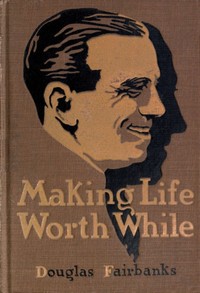
This digital edition of Making Life Worth While — Themes and Context is described by source-level measurements including 17,644 words, 1 hr 17 min estimated reading time, and 24 detected text sections.
The text analysis averages about 20.0 words per sentence, while the detected sections provide another way to judge how the source is divided.
Project Gutenberg metadata also associates the work with “Conduct of life,” connecting these edition facts with the source record’s subject description.
Explore this collection
These alternatives are selected using recorded categories and estimated reading time.
About 71 minutes
Ethics
16,234 recorded words. 6 minutes difference from this book's estimate.
View Gutenberg source #16986About 70 minutes
Ethics
15,941 recorded words. 7 minutes difference from this book's estimate.
View Gutenberg source #14629About 70 minutes
Ethics
16,066 recorded words. 7 minutes difference from this book's estimate.
View Gutenberg source #69367Search stored excerpts and compare books → Choose by your preferences →
Choices use stored catalog measurements. Estimates vary with reading speed. A shared category is a catalog label, not a claim that two books have the same argument or literary quality.
Search reads excerpt text stored with this catalog and links to its associated Gutenberg record. The connection is stored in the site database; this tool does not recheck that every excerpt is word-for-word identical to that external record. Excerpt search does not cover every chapter and does not verify historical publication dates.
Catalog snapshot checked: 2026-09-26. Coverage: 98 public books, 98 available source excerpts.
Calculated from edition completeness, EPUB availability, text structure and catalogue metadata. Not a user rating.
Total of 100 points, scaled to a 2.5-5.0 range. Editions with an empty description or a missing EPUB file are not scored.
Public-domain source text
The source text is kept in the dedicated reader, separate from this catalogue record and its commentary.
Douglas Fairbanks opens Making Life Worth While with a direct attack on the rocking chair, calling it a "monstrous thief of time" that belongs only at bedtime. This image recurs throughout the book as a shorthand for passive dreaming. Fairbanks writes in a brisk, conversational style, often addressing the reader as "you" and inserting wry asides—"(Courage, friend reader. This isn’t the beginning of the novel I intend to write.)"—that keep the tone light even when the advice is earnest.
The book is structured as a series of short chapters with titles like "Little Grains of Sand" and "Harnessing the Brain," each building on the idea that life's value comes from small, deliberate actions. Fairbanks draws on his own experience as a film star and author of the earlier Laugh and Live, but he avoids autobiography in favor of illustrative stories, such as a long anecdote about a life insurance agent who challenges a wealthy man to recover his health in a week.
Fairbanks returns to the rocking chair at several points, using it as a concrete emblem of inertia. In the first chapter, he contrasts the chair with active verbs: "turning up something on your own account" rather than hoping. Later, he describes a man who "held down a seat in the rocking chair fleet out on the shady piazza" as failing to make the most of life. The chair is not just furniture but a structural device that ties together the book's argument against passivity. Fairbanks even admits there is "a time for everything, even the stealthy, creeping rocking chair—and that’s about bedtime," a qualification that prevents the image from becoming a mere slogan. By repeating the motif across chapters, he creates a visual shorthand for the book's central opposition between motion and stillness.
The longest sustained narrative in the excerpts is the tale of a life insurance agent who bets a despondent businessman that he can regain his health in a week. The agent diagnoses the man's problem not as physical but as mental: "You didn't go crazy— your..." (the excerpt cuts off). The story is told in the businessman's voice, with Fairbanks framing it as a lesson in the power of directed attention. The agent's method is to prescribe small, daily actions—"little things"—rather than grand reforms. This anecdote exemplifies Fairbanks's reliance on secondhand testimony and dialogue to make his points. He does not claim to have witnessed the event; instead, he presents it as a story heard from a friend, which adds a layer of oral tradition to the book's argument. The agent's confident, good-natured tone mirrors Fairbanks's own authorial voice, suggesting that the cure for despair is a combination of humor and routine.
Fairbanks shifts settings rapidly, often within a single chapter. The opening scene is a shady piazza; then the insurance agent story moves to Long Beach, under an umbrella-tent, with bathers and waves. Later, the list of illustrations hints at a "studio confab" and "alone with the Grand Canyon." This restless movement mirrors the book's philosophy: life is a series of scenes to be entered fully. Fairbanks does not linger in one location; he uses each setting to illustrate a different facet of his argument. The beach scene emphasizes physical vitality and social encounter; the studio suggests creative work; the Grand Canyon implies solitude and awe. By jumping between these backdrops, he creates a sense of momentum that reinforces his message that stagnation is the enemy of a worthwhile life. The reader is never allowed to settle into a single mood or place.
Fairbanks frequently breaks the fourth wall, speaking directly to "you" and even commenting on his own writing process. In the insurance agent anecdote, he inserts: "(Courage, friend reader. This isn’t the beginning of the novel I intend to write.)" This aside acknowledges the artifice of the story while also building rapport. He also uses rhetorical questions—"Am I right?"—and commands: "Let there be no mistake about Making Life Worth While." This direct address turns the book into a kind of conversation, with the reader cast as a willing participant in Fairbanks's self-improvement project. The foreword reinforces this by stating that the book has "no particular plan or sequence" and contains "everything in general—and nothing in particular," which paradoxically invites the reader to find their own path through the material. The effect is that of a friendly, if occasionally bossy, mentor.
Fairbanks's method is cumulative rather than linear. Readers will find that the chapters can be taken in any order, each offering a variation on the theme of active engagement. Pay attention to the small details—the grains of sand, the rocking chair, the insurance agent's smile—as they are the building blocks of his argument. The book rewards those who read it as Fairbanks suggests one should live: with curiosity and a willingness to be moved by the next scene.
Reading Fairbanks’s call to shake off the rocking chair, I remembered my grandfather’s porch, still and dusty, and how I once found his old annotated copy of The Secret Doctrine, Vol. 4 of 4 The Synthesis of Science, Religion, and Philosophy — Background and Themes—it offered a different stillness, one that felt like waiting. Both books hummed with the same quiet tension between motion and pause.
Build a private reading journal entry for this title.









