About 146 minutes
The Yoga Sutras of Patanjali: The Book of the Spiritual Man — A Reader’s Guide
Ethics
33,580 recorded words. 6 minutes difference from this book's estimate.
View Gutenberg source #2526
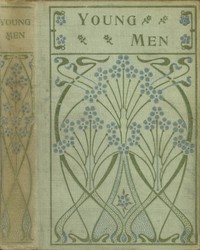
Young Men; In Business — Text and Context can be approached with a clearer sense of reading commitment from its source measurements: 34,780 words, 2 hr 32 min estimated reading time, and 12 detected text sections.
The text analysis averages about 21.2 words per sentence, while the detected sections provide another way to judge how the source is divided.
Project Gutenberg metadata also associates the work with “Young men -- Conduct of life,” connecting these edition facts with the source record’s subject description.
Explore this collection
These alternatives are selected using recorded categories and estimated reading time.
About 146 minutes
Ethics
33,580 recorded words. 6 minutes difference from this book's estimate.
View Gutenberg source #2526About 146 minutes
Ethics
33,399 recorded words. 6 minutes difference from this book's estimate.
View Gutenberg source #10390About 164 minutes
Ethics
37,578 recorded words. 12 minutes difference from this book's estimate.
View Gutenberg source #47993Search stored excerpts and compare books → Choose by your preferences →
Choices use stored catalog measurements. Estimates vary with reading speed. A shared category is a catalog label, not a claim that two books have the same argument or literary quality.
Search reads excerpt text stored with this catalog and links to its associated Gutenberg record. The connection is stored in the site database; this tool does not recheck that every excerpt is word-for-word identical to that external record. Excerpt search does not cover every chapter and does not verify historical publication dates.
Catalog snapshot checked: 2026-09-26. Coverage: 98 public books, 98 available source excerpts.
Calculated from edition completeness, EPUB availability, text structure and catalogue metadata. Not a user rating.
Total of 100 points, scaled to a 2.5-5.0 range. Editions with an empty description or a missing EPUB file are not scored.
Public-domain source text
The source text is kept in the dedicated reader, separate from this catalogue record and its commentary.
The book opens with a dedication to George Williams and the members of Young Men’s Christian Associations in the United Kingdom and America. The authors immediately clarify the association’s purpose: not to condemn literary or recreative societies, but to offer a distinctively Christian alternative aimed at saving young men from irreligion and promoting spiritual culture. This framing sets the tone for a work that is both defensive and aspirational, acknowledging that the association’s aims are sometimes misunderstood.
The early pages present a stark diagnosis of the age’s gravest perils. The authors identify three errors: materialistic worldliness, scientific atheism, and intellectual rationalism. Each is described with specific language: worldliness inclines attention to “the interests, pleasures, and gains of the world of sense”; atheism attempts to “bow God out of his universe”; rationalism makes man his own savior. The text warns that if belief in a self-existent God is lost, “the wide floodgates of iniquity and of lawlessness will be opened.” This passage, though sweeping, grounds its argument in a specific historical reference—Mr. Buckle’s association of materialistic philosophy with the French Revolution—giving the reader a concrete anchor for the authors’ concerns.
A later excerpt recounts the story of a Christian who entered the Colosseum, threw himself between gladiators, and commanded them to cease. The crowd’s reaction is described vividly: “they cried out; they rose on him; they tore up the arches; stones hissed around him.” The martyr’s blood, the text claims, was the last shed in that arena, and the emperor Honorius proscribed the games. The authors use this episode to illustrate “the might of a simple act of decision for truth and conscience.” The language is direct and exhortative: “Where the timid will start back in fear, there you may bless the coming ages.” This section shifts from diagnosing societal ills to urging personal courage, emphasizing that individual choices can have immortal consequences.
The closing exhortation intensifies the focus on personal accountability. The text insists that at the end of life, men will be judged “not by the earthly standard, but by what they have been and have done.” A striking metaphor compares this to merchandise shipped from England: the price set at the colonial port differs from the original. Similarly, after death, angels will not ask about worldly standing but about fidelity and consecration. The passage repeatedly stresses solitude: “Alone you will go into that eternity, as alone you came into existence.” It quotes a noble youth: “I shall die as an individual; I shall be judged as an individual: I am resolved, therefore, to live as an individual.” This direct address, using “thou” and “thy,” creates a sense of intimate urgency.
Another section introduces what the authors call “the doctrine of moral growth,” which they deem of “infinite moment to a young man.” The text asserts that a young man indifferent to this doctrine has “waste or perdition” inscribed on his forehead, while one persuaded of the possibility of moral progress can reach “a majesty of character, a force, and a beauty of spirit.” This binary framing—growth versus perdition—reinforces the book’s high stakes. The language is emphatic and binary, leaving little room for neutrality. Readers are encouraged to see themselves as either progressing toward spiritual excellence or sliding toward ruin, with no middle ground.
These excerpts reveal a work that moves from broad cultural critique to intimate personal appeal. The authors consistently frame moral choice as both urgent and solitary, using historical examples and direct address to press their case. A first-time reader should expect a text that is less a systematic treatise than a series of passionate addresses, each building on the conviction that individual decisions have eternal weight. The book’s structure—dedication, diagnosis, exemplum, exhortation—invites the reader to see themselves as the young man being addressed, standing at the beginning of manhood with a brief span ahead.
I finished Young Men; In Business and kept thinking about that quiet call to decide for yourself, despite the noise. It reminded me of the steady, principled voice in An apology for abolitionists addressed by the anti-slavery society of Meriden, Conn., to their fellow citizens — Reading Companion. Both spoke to that same stubborn, personal moral place inside me—unhurried, sincere, and oddly comforting long after I put them down.
Save your reaction, strongest insight, and memorable passage.









