
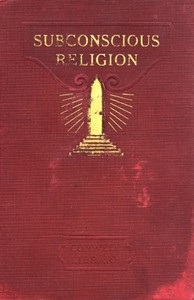
Subconscious Religion by Russell H. Conwell
Russell H. Conwell, best known for his legendary 'Acres of Diamonds' speech, takes a sharp turn from success philosophy to explore the foundations of faith in 'Subconscious Religion.' Written over a century ago, it feels less like a sermon and more like a psychological investigation.
The Story
There's no traditional plot with characters. Instead, Conwell lays out his case like a lawyer. He starts with a simple observation: people often profess strong religious beliefs, but those beliefs don't always translate into courage, peace, or joy in daily life. Why the gap? He pins the blame on what he calls 'conscious religion'—the intellectual arguments, doctrinal debates, and Sunday rituals that occupy our active minds. The real power, he claims, lies in 'subconscious religion': the deep, automatic convictions that operate without thought, guiding our instincts and reactions. The 'story' is his journey to convince us that we need to stop arguing about religion and start training our subconscious minds to truly believe, through repetition and habit, so faith becomes as natural as breathing.
Why You Should Read It
I'll be honest, some of the language is dated. But the core idea is incredibly sticky. Reading this, I kept thinking about modern concepts like 'implicit bias' or 'muscle memory,' but applied to spirituality. Conwell was onto something we now understand better: the mind's autopilot is incredibly powerful. His call to move faith from the lecture hall of your brain down into the workshop of your heart is compelling. It's less about changing your beliefs and more about making them real. The book challenges the performative aspect of religion and pushes for something authentic and integrated. It made me question my own automatic responses—are they rooted in fear, or in a deep-seated trust?
Final Verdict
This isn't for readers looking for a thrilling narrative or step-by-step doctrine. It's a short, dense essay for the curious thinker. It's perfect for anyone interested in the psychology of belief, the history of self-help ideas, or people of faith feeling worn out by intellectual debates and craving a more grounded, experiential spirituality. If you can read past the old-fashioned prose, you'll find a surprisingly relevant meditation on where our deepest truths really live.
Legal analysis indicates this work is in the public domain. Access is open to everyone around the world.
Richard Jackson
1 month agoMy first impression was quite positive because the quality of the diagrams and illustrations (if applicable) is top-notch. I’ll definitely be revisiting some of these chapters again soon.
Karen Lee
1 year agoThe methodology used in this work is academically sound.
Jackson Garcia
9 months agoAs someone who reads a lot, the emotional weight of the story is balanced perfectly. A true masterpiece.
Emily Lewis
1 year agoThanks for the recommendation.





Jennifer Garcia
2 years agoIf you're tired of surface-level information, the concise summaries at the end of each section are a lifesaver. This has become my go-to guide for this specific topic.