
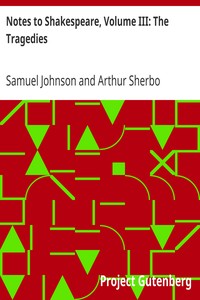
Notes to Shakespeare, Volume III: The Tragedies by Samuel Johnson
This isn't a story in the usual sense. Notes to Shakespeare, Volume III: The Tragedies is Samuel Johnson's line-by-line companion to plays like Hamlet, King Lear, Othello, and Macbeth. Published in 1765, it was part of his landmark edition of Shakespeare's works. Johnson doesn't rewrite the plays; he walks alongside them. He explains obscure words, untangles tricky passages, and argues with earlier editors. He points out what he thinks are Shakespeare's breathtaking successes and, just as frankly, calls out what he sees as plot holes, moral failings, or just plain bad writing.
The Story
There's no narrative plot. Instead, the 'story' is Johnson's intellectual journey through the emotional wreckage of Shakespeare's greatest tragedies. He maps the descent of Lear into madness, analyzes the fatal hesitation in Hamlet, and dissects the poisonous jealousy of Othello. He's constantly asking: Does this make sense? Is this character believable? Is this action justified? The drama is in the clash between Johnson's 18th-century desire for reason, clarity, and poetic justice, and Shakespeare's wild, timeless exploration of human nature at its most extreme.
Why You Should Read It
This book makes Shakespeare feel alive and debated, not like a dusty monument. Johnson's voice is incredibly strong. He's witty, fiercely intelligent, and often hilariously opinionated. When he praises, it's magnificent. When he criticizes, you can almost hear him sighing in frustration. Reading his notes is like having the smartest person you know sitting next to you at the theater, whispering brilliant observations and the occasional grumble. It deepens your understanding by showing you how one great mind wrestled with another. You don't have to agree with him (I often don't!), but you'll never see these plays quite the same way again.
Final Verdict
Perfect for anyone who has ever read a Shakespeare tragedy and thought, 'Wait, why did that character do that?' or 'What does this word even mean?' It's for book clubs tackling the Bard, students who want to go beyond the SparkNotes, and general readers who enjoy literary detective work. It's not a quick, easy read—you need a copy of the plays handy—but it's a profoundly rewarding one. You get two geniuses for the price of one: Shakespeare's raw, emotional power and Johnson's razor-sharp clarity, all in a fascinating conversation across the centuries.
This title is part of the public domain archive. Preserving history for future generations.
Melissa Clark
4 months agoSimply put, it creates a vivid world that you simply do not want to leave. This story will stay with me.
Emma Allen
1 year agoClear and concise.
John White
1 year agoBased on the summary, I decided to read it and the depth of research presented here is truly commendable. I learned so much from this.
Sandra Gonzalez
1 year agoWithout a doubt, the content flows smoothly from one chapter to the next. Don't hesitate to start reading.




Elijah Lopez
1 year agoFrom the very first page, the pacing is just right, keeping you engaged. Truly inspiring.