
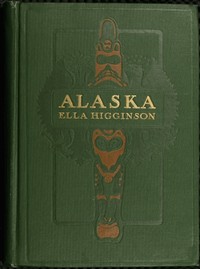
Alaska, the Great Country by Ella Higginson
Published in 1908, Ella Higginson's Alaska, the Great Country is a work of literary travel writing that captures a fleeting moment in history. It's not a dry guidebook or a sensationalized adventure log. Instead, it's the thoughtful, detailed account of a woman exploring America's last frontier just as the 19th century turned into the 20th.
The Story
There isn't a traditional plot. The 'story' is Higginson's journey itself. She traveled by steamship, canoe, and on foot, from the Inside Passage's misty forests to the harsh interior near the Yukon River. She structures her book geographically, guiding the reader from town to wilderness and back again. In Skagway, she recounts the frantic stampede of the Klondike Gold Rush, now past. In Sitka, she describes the fading influence of Russian culture. She spends pages detailing the overwhelming silence and scale of the Muir Glacier, then shifts to the cramped, lively quarters of a fishing camp. The narrative is driven by her encounters: conversations with a successful miner who's lost his family, observations of Tlingit village life, and the shared stories of pioneers who are equal parts hopeful and exhausted.
Why You Should Read It
You should read this for the voice. Higginson writes with awe but never romanticizes. She's honest about the bugs, the mud, the isolation, and the sheer difficulty of life there. Yet, her descriptions of the landscapes are so powerful you can almost feel the cold, clean air. What stuck with me most were the people. She gives them space to speak, and through them, we see Alaska not as a blank space on a map, but as a complex place of clashing dreams, ancient cultures, and stubborn survival. She was also one of the first writers to treat Alaska with the seriousness it deserved, arguing for its beauty and potential long before most Americans gave it a second thought.
Final Verdict
This book is perfect for anyone who loves armchair travel, American history, or nature writing. If you enjoyed John Muir's descriptive passion or the grounded realism of Jack London's tales, you'll find a fascinating middle ground here. It's also a great pick for modern travelers to Alaska who want to understand the layers of history beneath the cruise ships and hiking trails. Fair warning: it's a product of its time, so some perspectives are dated. But read with that in mind, and you'll discover a captivating, firsthand portrait of a world that has utterly vanished.
This book is widely considered to be in the public domain. It serves as a testament to our shared literary heritage.
Ethan White
2 months agoWow.
Margaret Thompson
2 months agoI was skeptical at first, but the narrative structure is incredibly compelling. A true masterpiece.
Jackson Lee
3 months agoNot bad at all.






Margaret Harris
9 months agoAs a professional in this niche, the language used is precise without being overly academic or confusing. A perfect balance of theory and practical advice.